When exploring the history of modern Benin, it is easy to focus exclusively on the coastal ports and the heavy shadow of the Atlantic trade. But if we travel inland to the Abomey Plateau—the historic heart of the Kingdom of Dahomey—we uncover a completely different layer of this powerful state.
To truly understand the resilience of the communities we partner with through our *Ride it Forward* project, we need to look at how Dahomey sustained its sovereignty. Beyond their military might, the Fon people built an incredibly sophisticated society rooted in artistic mastery, spiritual depth, and complex internal trade.
The Royal Palaces of Abomey: Architectural Genius
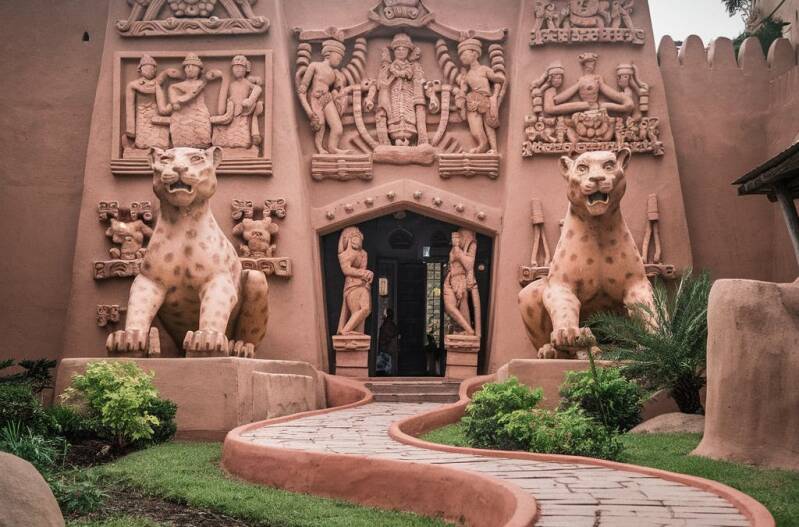
Dahomey was an exceptionally centralized state, and nothing symbolized its power more than the Royal Palaces of Abomey. Rather than a single castle, each successive king built their own sprawling palace complex out of local earth, clay, and thatch, creating a massive royal city.
These palaces weren't just residential; they were the nervous system of the empire:
The Bas-Reliefs: The earthen walls of the palaces were adorned with intricate, painted clay bas-reliefs. These served as a visual history book for a society with a rich oral tradition, depicting royal symbols, historic battles, and allegorical animals representing the power of different kings.
The Royal Treasury: The palaces housed a highly organized system of state records, overseen by royal officials who tracked regional agricultural yields, textiles, and imported goods using physical tokens and memory aids.
Art as Statecraft: Appliqué and Brass Casting
In pre-colonial Dahomey, art was highly political and deeply respected. The kings established exclusive royal guilds for artisans, meaning the finest craftsmen worked directly for the court in Abomey.
Two distinct art forms showcase the ingenuity and cultural trade of the kingdom:
The Fon Appliqué Cloths: Artisans created vibrant textile tapestries by cutting out bold shapes of colored fabric and sewing them onto a larger canvas. These cloths told complex stories, encoded military strategies, and displayed the personal emblems of the rulers.
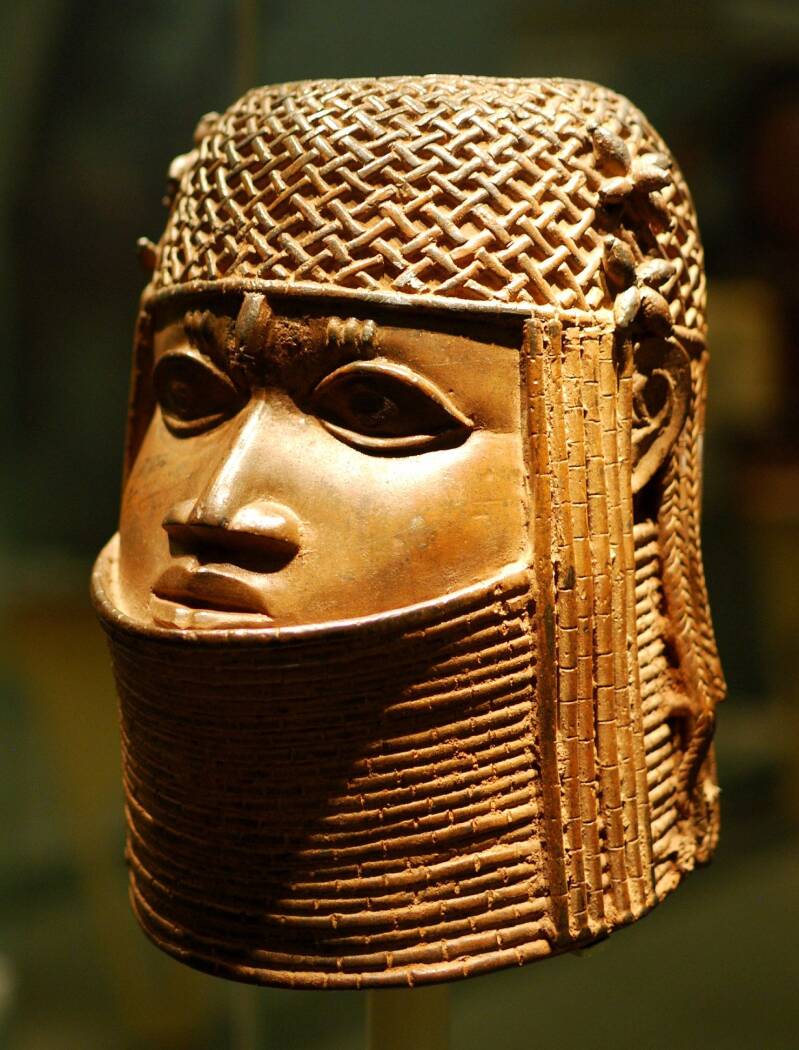
Lost-Wax Brass Casting: While neighboring Yoruba kingdoms are famous for their bronzes, Dahomey’s metalworkers mastered the intricate lost-wax casting technique to create expressive brass statues, ceremonial weapons, and royal scepters. These pieces were often traded across West African inland networks, cementing Dahomey's status as a cultural epicenter.
Spiritual Architecture: The Resilience of Vodun
You cannot discuss the resilience of Benin without discussing Vodun (often misspelled or misunderstood in Western pop culture as Voodoo). In pre-colonial Dahomey, Vodun was not a fractured set of folk beliefs—it was a sophisticated, state-sanctioned spiritual philosophy that organized daily life, law, and environmental conservation.
Sacred Groves: Dahomey’s leaders and spiritual structures protected vast patches of native forest, known as sacred groves, where logging and clearing were strictly forbidden. These acted as ancient ecological reserves, preserving biodiversity and local medicinal plants.
Cultural Preservation: When millions of individuals were displaced across the Atlantic, it was this exact spiritual framework that traveled with them. The core philosophies of Vodun survived the brutal middle passage, evolving into Haitian Vodou, Brazilian Candomblé, and Cuban Santería—proving to be one of the most resilient cultural systems in human history.
Connecting Craftsmanship to Today's Community
When we look at the young people and mechanics working in Porto Novo today, we aren't looking at a community starting from scratch. We are looking at the descendants of master builders, textile designers, metalworkers, and deep philosophical thinkers.
Our *Ride it Forward* program doesn't bring ingenuity *to* Benin; it collaborates with the ingenuity that has always been there. By shipping high-quality tools and parts from Vancouver, we are simply providing the modern raw materials for a new generation of technical craftspeople to build their own independent futures.
Help us support the living legacy of West African craftsmanship.
Donate to Ride it Forward and Empower the Next Generation of Builders in Benin!